Connecting Vietnamese women intellectuals globally: From exchanges to practical cooperation


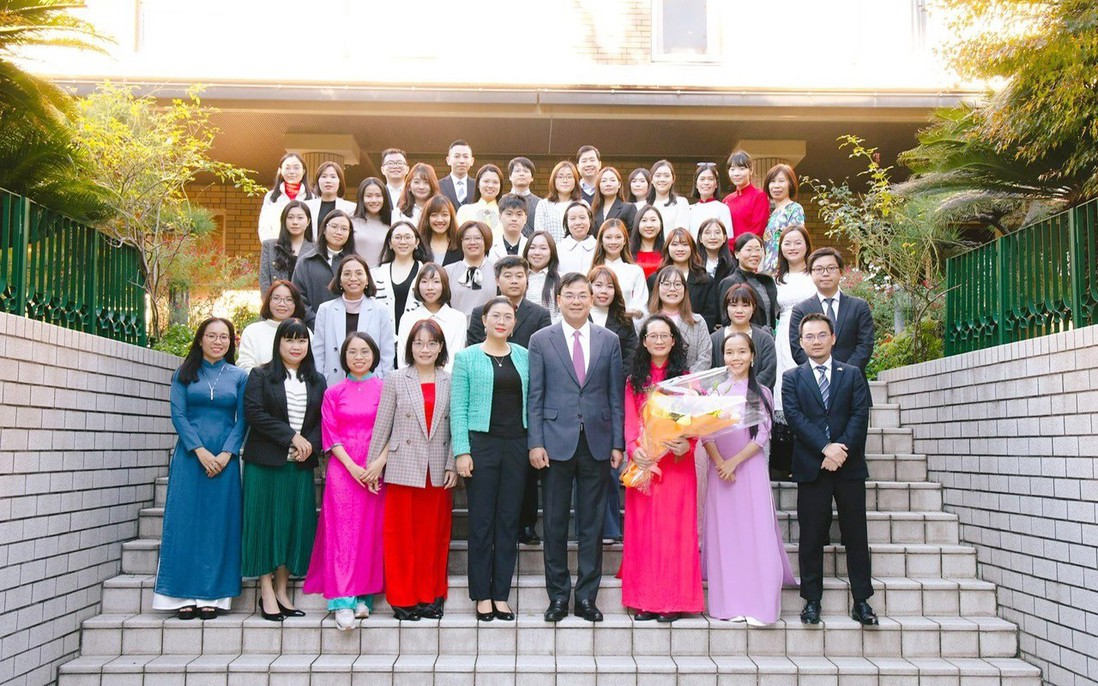
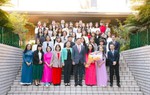
Representatives of the Vietnam-Japan Association of Women Intellectuals at the Vietnamese Embassy in Tokyo
The Vietnam-Japan Association of Women Intellectuals hopes that the 4th National Congress of the Vietnam Association for Intellectual Women will open a new approach to connecting women intellectuals at home and abroad, gradually building a structured cooperation network with clear mechanisms and focal points to mobilise the intellectual resources of Vietnamese women around the world.
Q: What does the Viet Nam-Japan Association of Women Intellectuals (VJIWU) expect from the 4th National Congress of the Vietnam Association for Intellectual Women, particularly in strengthening links between women intellectuals in Viet Nam and Vietnamese women intellectuals abroad?
VJIWU: We hope the 4th Congress will mark a new stage in connecting Vietnamese women intellectuals, moving beyond exchanges towards building a substantive cooperation network between women intellectuals at home and abroad.
The 4th National Congress of the Vietnam Association for Women Intellectuals, scheduled for 25-26 September 2026, comes at a significant time, shortly after the Politburo issued Resolution No. 23-NQ/TW on 2 August 2026, identifying overseas Vietnamese as a "strategic resource and a bridge to the world" and shifting the approach to diaspora affairs from "mobilising and gathering" towards "accompanying and creating mechanisms".
We hope the Congress will formally include the connection of women intellectuals at home and abroad in the Association's Charter and orientations for the new term. One possible mechanism could be a liaison board for Vietnamese women intellectuals abroad under the Association, so organisations such as VJIWA can move beyond event-based cooperation and have a permanent, officially recognised point of contact.
Q: What resources and advantages do Vietnamese women intellectuals abroad currently have that could contribute to the development of the wider network of Vietnamese women intellectuals?
VJIWU: The network of Vietnamese women intellectuals abroad has three clear strengths. First, they have direct access to cutting-edge technologies, research standards and innovation ecosystems in their host countries, which are highly relevant to the 10 strategic technology sectors identified in Resolution No. 23, including artificial intelligence, semiconductors and biotechnology. Second, they have extensive international networks involving research institutions, businesses and professional organisations in their host countries. Third, they have experience operating non-profit organisations according to international standards, which can in turn provide useful experience for women intellectuals' organisations in Vietnam.
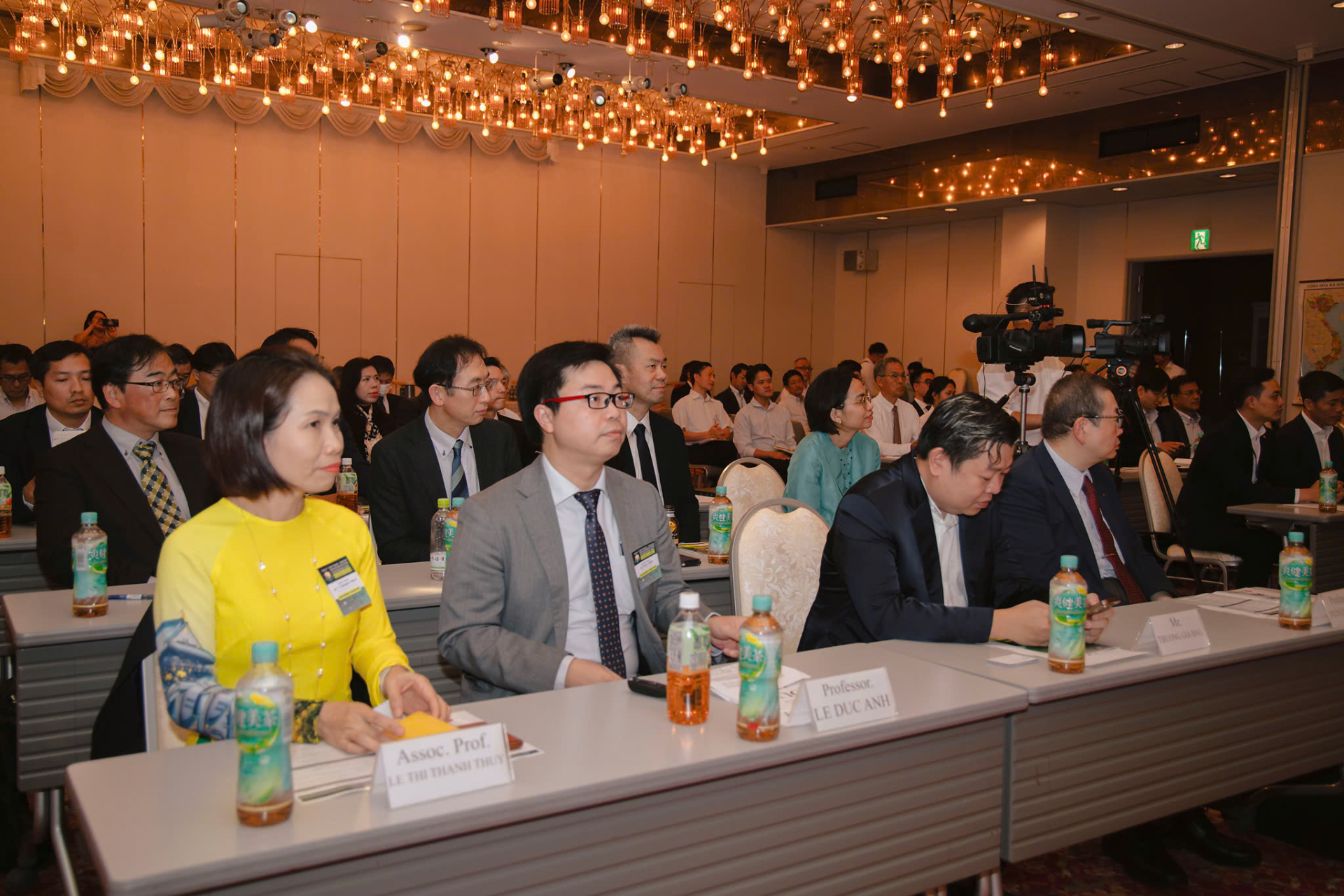
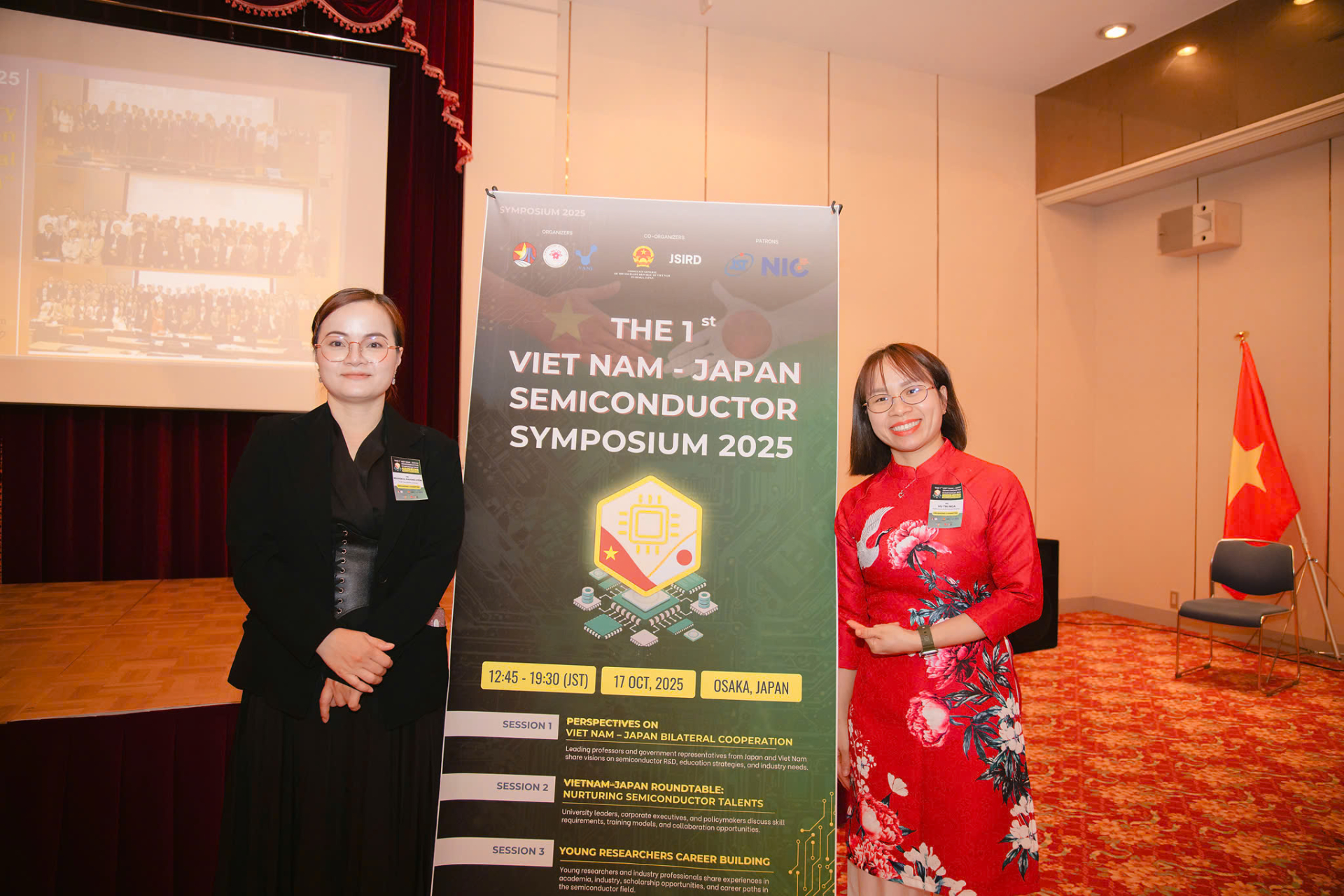
Assoc. Prof. Le Thi Thanh Thuy of the Vietnam-Japan Association of Women Intellectuals (VJIWA), a member of the organising committee of a semiconductor conference.
Q: Where should the Vietnam Association for Women Intellectuals start in order to build a broader and more regular network of women intellectuals?
VJIWU: Based on our experience working abroad, the first priority should be establishing a permanent focal point and a regular mechanism for connection. The Vietnam Association for Women Intellectuals could develop a shared digital platform containing an expert database, information channels and an event calendar, so that associations in Japan, the US, Australia, Europe and elsewhere would not have to establish connections separately.
The Association could also regularly organise joint scientific forums, such as the National Women Scientists Conference with an online component or invitations to overseas Vietnamese delegates, to maintain continuous interaction rather than limiting engagement to the time of the Congress.
Building on that foundation, transnational professional groups could be established, along with regular online seminars, mentoring programmes and joint research teams. We particularly hope that the Association will strengthen its role as a focal point connecting the national organisation of women intellectuals with associations of Vietnamese women intellectuals abroad, thereby building a global network of Vietnamese women intellectuals.
Q: What would an international network of Vietnamese women intellectuals look like?
VJIWU: We envision a "hub-and-spoke" model, with the Vietnam Association for Women Intellectuals serving as the coordinating hub and member associations in individual countries operating autonomously while sharing a common database, scholarships, bilateral research projects and cross-border mentoring mechanisms for young women intellectuals.
This would also be consistent with the INWES-APNN network model, of which the Association has been a member since 2013.
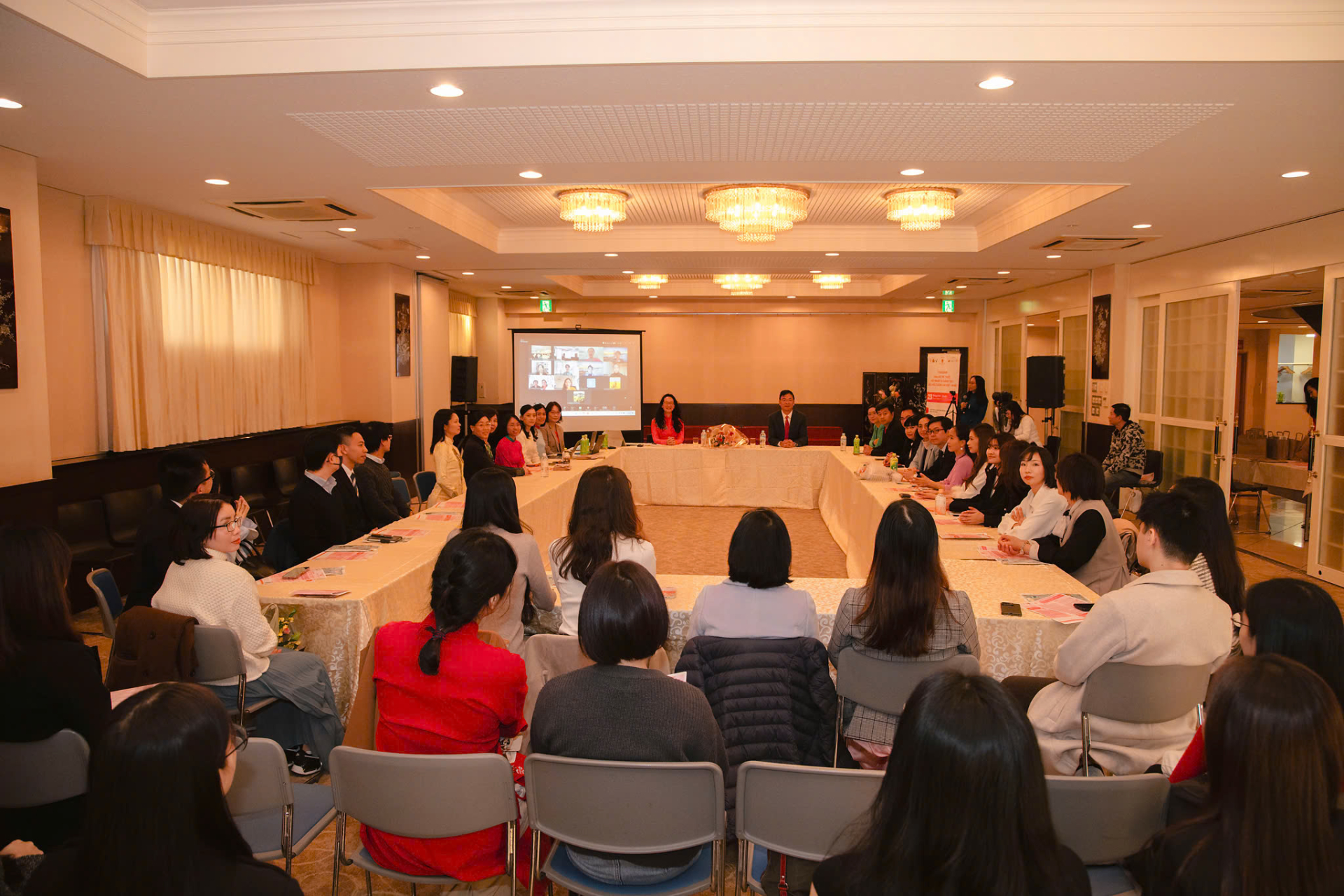
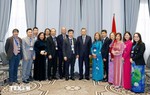
The seminar "Women Intellectuals: Integration and Innovation, a Bridge for the Future of Vietnam-Japan Relations".
Q: What specific proposals does the Association have for the 2026-2031 term to deepen connections with Vietnamese women intellectuals abroad?
VJIWU: We propose that the 4th Congress formalise cooperation with associations of Vietnamese women intellectuals abroad through concrete mechanisms, including signing memoranda of understanding with individual associations, establishing permanent two-way liaison points, and enabling representatives of overseas associations to participate and have a voice in major scientific forums organised by the domestic Association.
This would be a concrete implementation of the "creating mechanisms" approach set out in Resolution No. 23-NQ/TW, ensuring that the resources of Vietnamese women intellectuals abroad are put to practical use rather than remaining limited to exchanges.
The Vietnam-Japan Association of Women Intellectuals is a voluntary social and professional organisation established to bring together and unite women intellectuals within the Vietnamese community in Japan. It aims to promote their talent and intellectual resources in scientific research and knowledge dissemination, improve knowledge and skills among women and the wider community, and actively cooperate with international partners to contribute to women's advancement and gender equality.
The Association currently has 65 members, with a 12-member Executive Committee.
In 2024, a delegation from the Association returned to Vietnam to attend the 4th World Conference of Overseas Vietnamese and the 2024 Forum of Vietnamese Intellectuals and Experts Abroad, organised by the Ministry of Foreign Affairs in coordination with relevant agencies and sectors. The delegation also held working sessions with the Vietnam Association of Women Intellectuals.
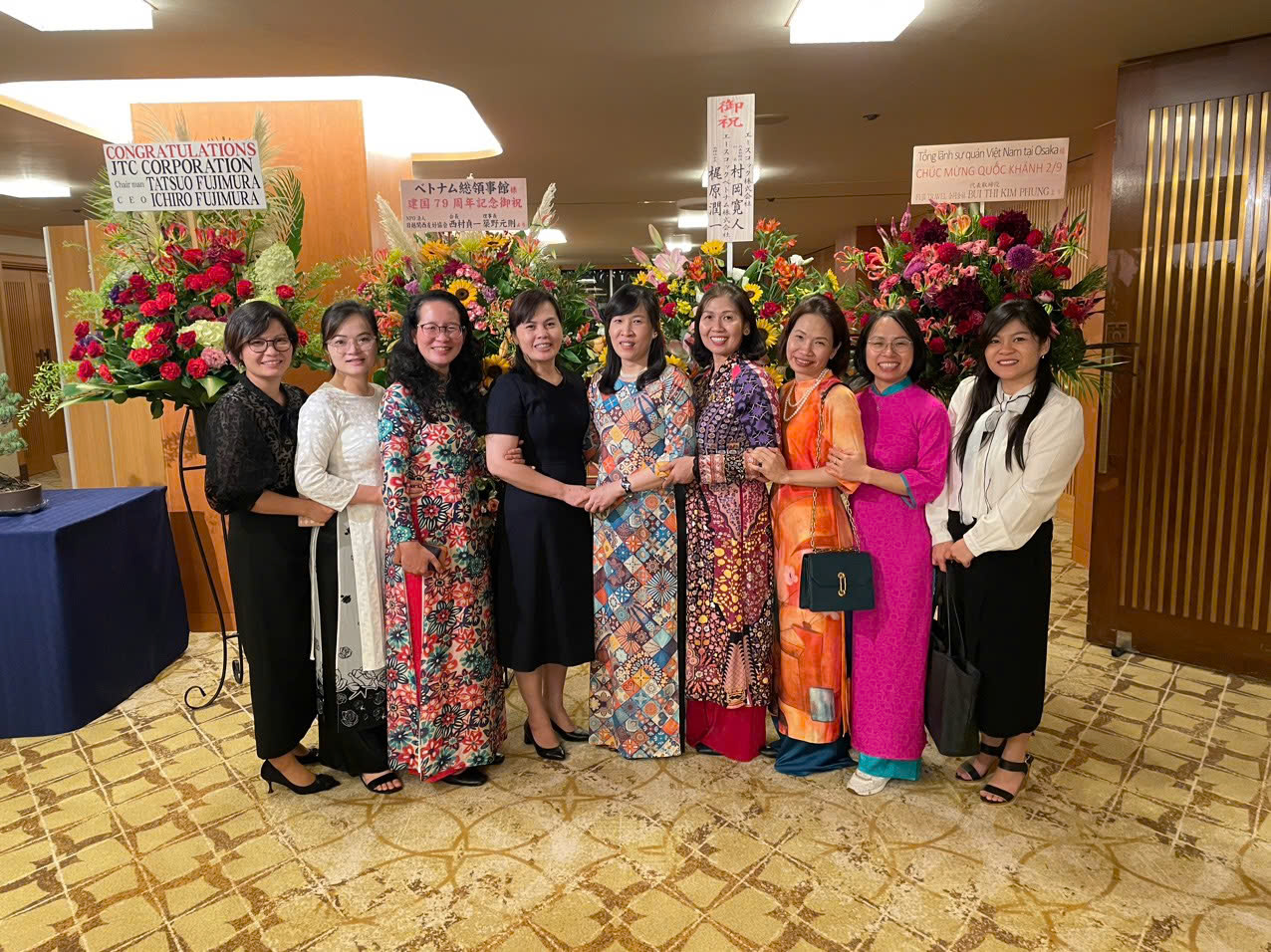
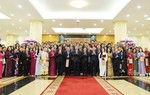
The Vietnam-Japan Association of Women Intellectuals attends a ceremony marking Viet Nam's National Day in 2024.
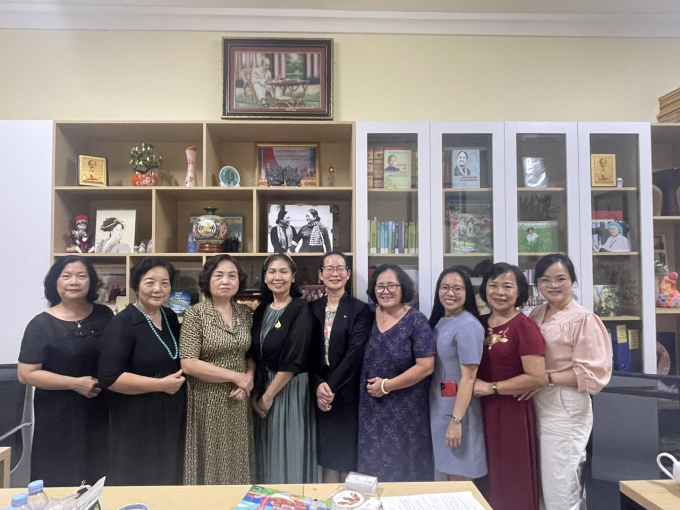
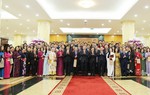
A delegation from the Vietnam-Japan Association of Women Intellectuals visits and works with the Vietnam Association of Women Intellectuals.
Source: phunumoi.net.vn