Bringing the heritage of Then traditional singing to the world


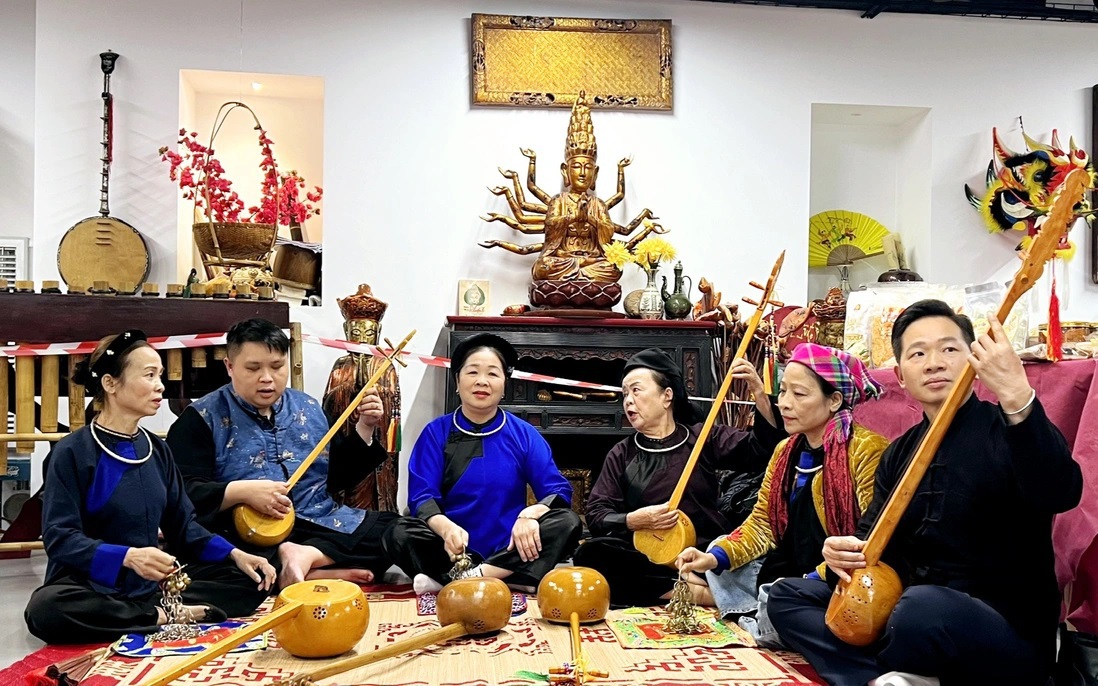
In 2026, the “Road to the Land of Then” programme will continue in the Lao People's Democratic Republic.
For over a decade, Dr. Hoang Thi Hong Ha - Chairwoman of the Parfums du Vietnam (Hội Tinh hoa Việt Nam) in France - has tirelessly pursued a journey to bring Then singing to overseas Vietnamese communities and international friends.
Then singing is a traditional folk performance that preserves the history, beliefs and cultural identity of the Tay, Nung and Thai ethnic communities. For Dr Hoang Thi Hong Ha, safeguarding this heritage means not only preserving the values of the past but also creating opportunities for Then singing to continue being practised, shared and adapted to contemporary life.
Heritage truly lives only when people continue to practise it, when communities continue to listen, and when each generation passes it on.
Dr Hoang Thi Hong Ha
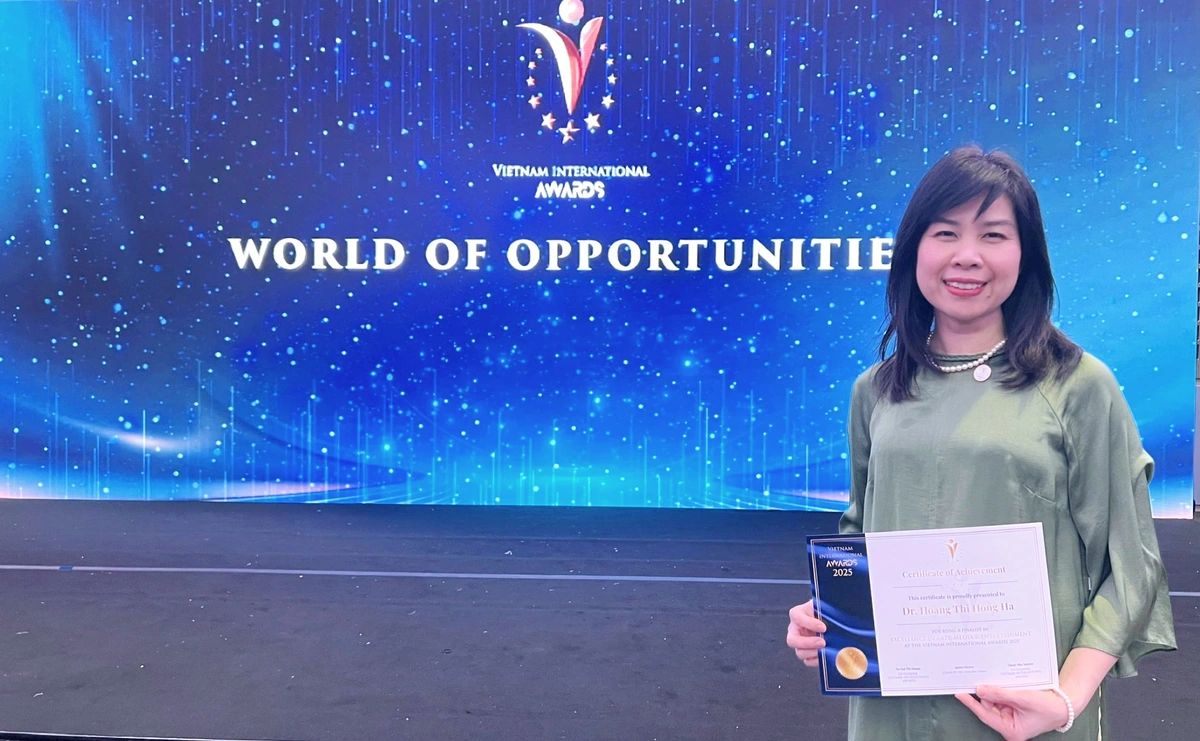
Dr. Hoang Thi Hong Ha
Taking the sound of the instrument beyond borders
The idea for the project "Preserving and Promoting Traditional Then Singing among Overseas Vietnamese Communities" was initiated by Dr Hoang Thi Hong Ha in 2015.
At the time, many veteran artisans were gradually leaving the stage, while the next generation remained limited in number. Meanwhile, overseas Vietnamese communities had few opportunities to experience traditional Vietnamese cultural heritage. It was against this backdrop that the project to preserve and promote Then singing was launched.
Between 2015 and 2024, the project focused primarily on research and preservation activities in Viet Nam. The research team conducted extensive fieldwork in Lang Son, Cao Bang, Thai Nguyen, Tuyen Quang and Quang Ninh, meeting master artisans, documenting ancient Then lyrics, making audio and video recordings, and collecting melodies, rituals and the body of folk knowledge associated with the art form.
Alongside documentation, the project organised numerous performances, cultural exchanges and teaching activities within local communities. According to Dr Hong Ha, the objective was not merely to archive materials but to ensure that artisans could continue practising the heritage within its original cultural environment.
A major milestone came in 2016, when Dr Hoang Thi Hong Ha became the first Vietnamese recipient of the highest award from the Maison des Cultures du Monde in France for her project "Le Then des Tay et des Nung". The award supports young researchers undertaking projects to preserve traditional performing arts that face the risk of disappearing around the world.
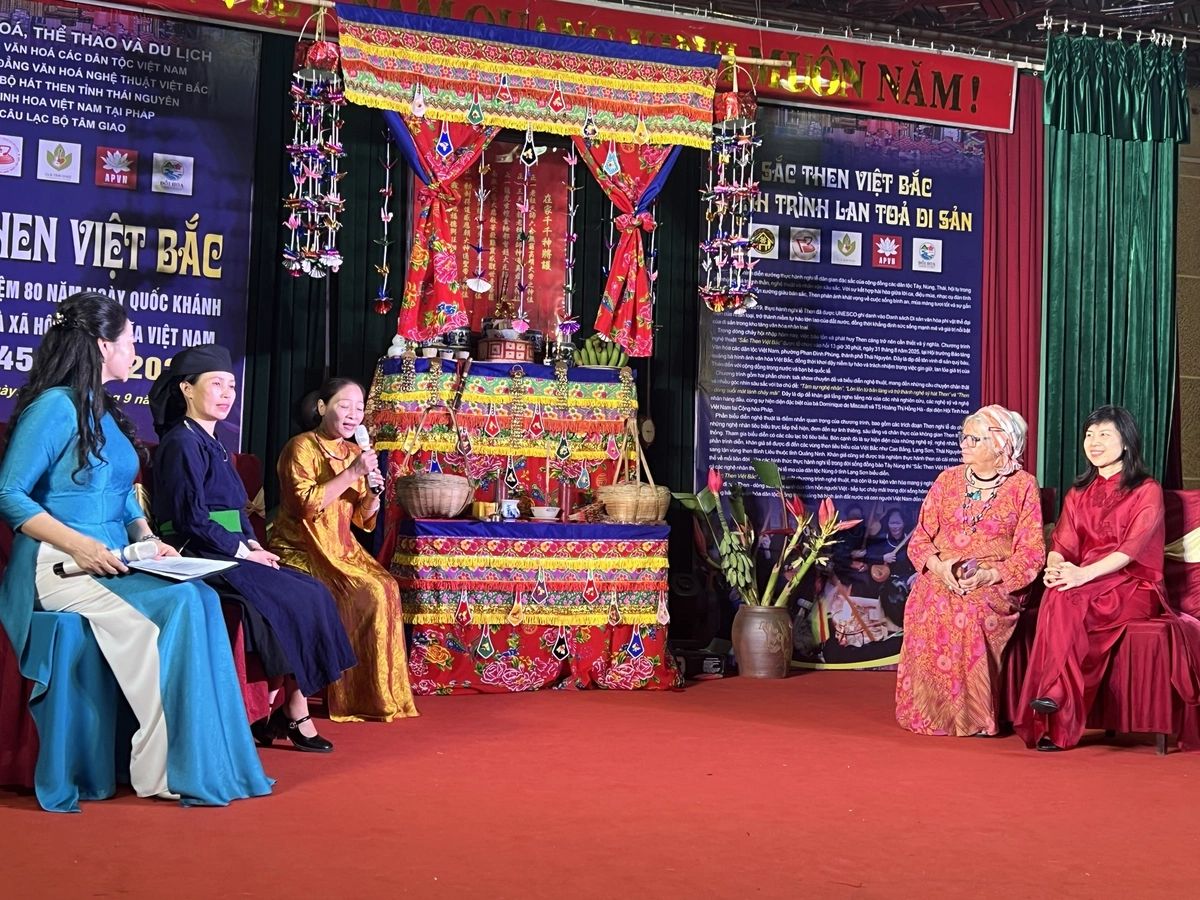
The project continues to thrive thanks to its members' love for the heritage and their voluntary commitment.
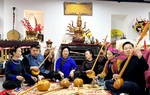
This achievement opened the door for Then singing to be introduced for the first time at the Festival de l'Imaginaire in France in 2017. Artisans from Cao Bang, Lang Son and Thai Nguyen brought the sound of the "tính" lute and traditional Then melodies to the international stage, helping introduce the cultural heritage of the Tay and Nung peoples to foreign audiences.
In 2019, when the Then practices of the Tay, Nung and Thai peoples were inscribed by UNESCO on the Representative List of the Intangible Cultural Heritage of Humanity, the project further expanded its international promotion activities.
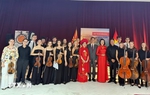
In 2024, the initiative entered a new phase by organising its first series of performances and cultural exchanges in Paris and Nice. Featuring Vietnamese artisans alongside French musician Dominique des Miscault, the programme once again introduced the sound of the dan tinh and Then singing to overseas Vietnamese communities and international audiences.
The project has also worked with artisan Nguyen Van Bach and many other master practitioners in Viet Nam on research, publications, teaching activities and documentation. The research team has also experimented with incorporating Then elements into contemporary artistic expressions, including collaborations with rap music, in order to engage younger audiences while fully respecting the heritage's core values.
Building an international network
Today, the project operates as a network of more than 20 collaborators across Viet Nam and Europe, including cultural researchers, folk artisans, university lecturers, performers, volunteers and members of Vietnamese associations in France. Dr Hoang Thi Hong Ha oversees the project's academic direction, partnership development and overall coordination.
She is supported by experienced artisans such as Nguyen Van Bach, Nong Thi Lim, Chu Van Minh, Nguyen Van Tho, together with performers Trieu Thuy Tien, To Hieu and Nong Cong Nam. They are directly responsible for teaching and ensuring that all project activities remain faithful to the authentic practice of the heritage.
2016: Dr Hoang Thi Hong Ha became the first Vietnamese recipient of the highest award from the Maison des Cultures du Monde (France) for the project "Le Then des Tay et des Nung".
2019: The Then practices of the Tay, Nung and Thai peoples in Viet Nam were inscribed by UNESCO on the Representative List of the Intangible Cultural Heritage of Humanity, providing fresh momentum for the project's international promotion.
According to Dr Hong Ha, the project's vitality comes from its members' shared passion for the heritage and their volunteer spirit. Although they live in different countries, they regularly connect online, exchange materials and work together to organise research projects, performances and promotional activities.
Over the past decade, the initiative has organised dozens of performances, seminars and Then practice spaces in various localities. It has also prioritised audio and video recording, publication of research materials and the promotion of the heritage through digital platforms.
According to Dr Hong Ha, in today's digital era, building a multilingual digital archive is one of the most important ways to help younger generations and international researchers gain access to reliable resources on the art of Then.
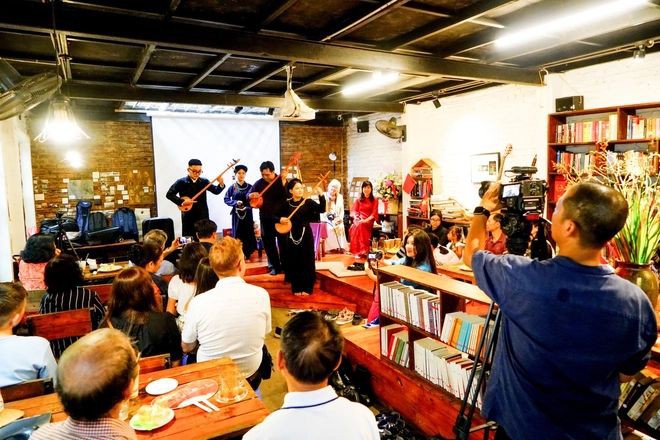
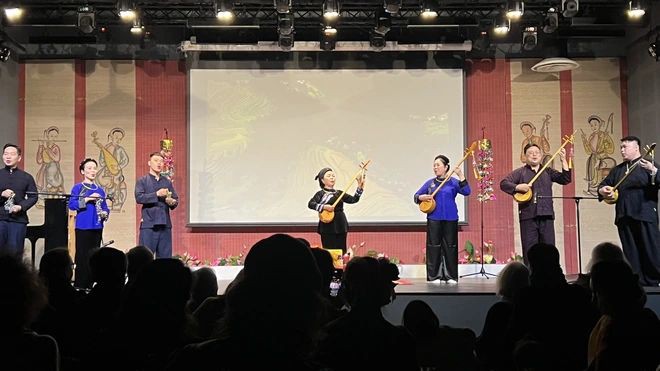
The programme has attracted large international audiences.
Following the principle that preservation should go hand in hand with promotion, the project also seeks to combine Then with contemporary art forms through workshops, exhibitions, seminars and interdisciplinary cultural exchanges. However, every activity places the highest priority on safeguarding the system of melodies, language, rituals, folk knowledge and cultural space that define Then.
Dr Hong Ha believes the project's greatest achievement is that an increasing number of young people are discovering, appreciating and actively learning about Then singing.
Looking ahead, she hopes to establish an international network dedicated to preserving the art of Then by connecting artisans, universities, museums, research centres and cultural organisations across different countries. At the same time, the project aims to complete a multilingual digital archive containing photographs, documentary films, audio recordings, musical transcriptions and academic research for public use.
In 2026, the "Road to the Land of Then" programme will continue in the Lao People's Democratic Republic, creating new opportunities for cultural exchange and regional cooperation.