Comprehensive innovation of the women's movement and the VWU's activities


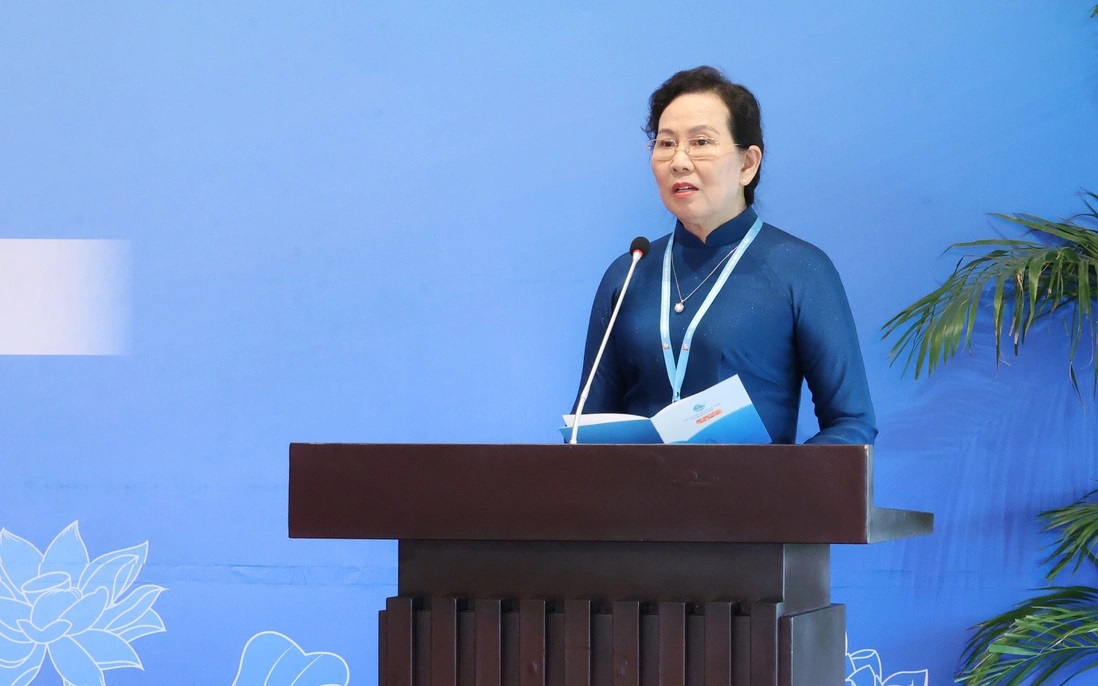
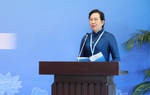
Ms. Le Thi Thuy, Member of the Party Central Committee, Vice Chairwoman of the Central Committee of the Vietnam Fatherland Front, and President of the VWU, delivers the introductory discussion speech
At the 14th National Women's Congress, delegates discussed a thematic topic of pivotal significance for the development of the VWU in the new period: "Continuing to innovate contents and operation methods; actively participating in building a clean and strong Party and political system".
Perfecting the Congress document system and a fundamental improvement in action thinking
Delivering the introductory speech at the discussion session, Ms. Le Thi Thuy, Member of the Party Central Committee, Vice Chairwoman of the Central Committee of the Vietnam Fatherland Front and President of the Central Committee of the Vietnam Women's Union (VWU), provided specific guidance on key focus areas for delegates to contribute their collective wisdom. VWU President Le Thi Thuy emphasized that although delegates had repeatedly offered feedback on the draft documents, direct and formal discussions at the discussion center during this Congress would help perfect these crucial texts in the most profound and substantive manner.
The system of documents submitted to this Congress includes four core contents: the Draft Political Report, the Draft Congress Resolution, the Draft Action Program to implement the Congress Resolution, and the Draft Review Report of the 13th VWU Central Executive Committee.
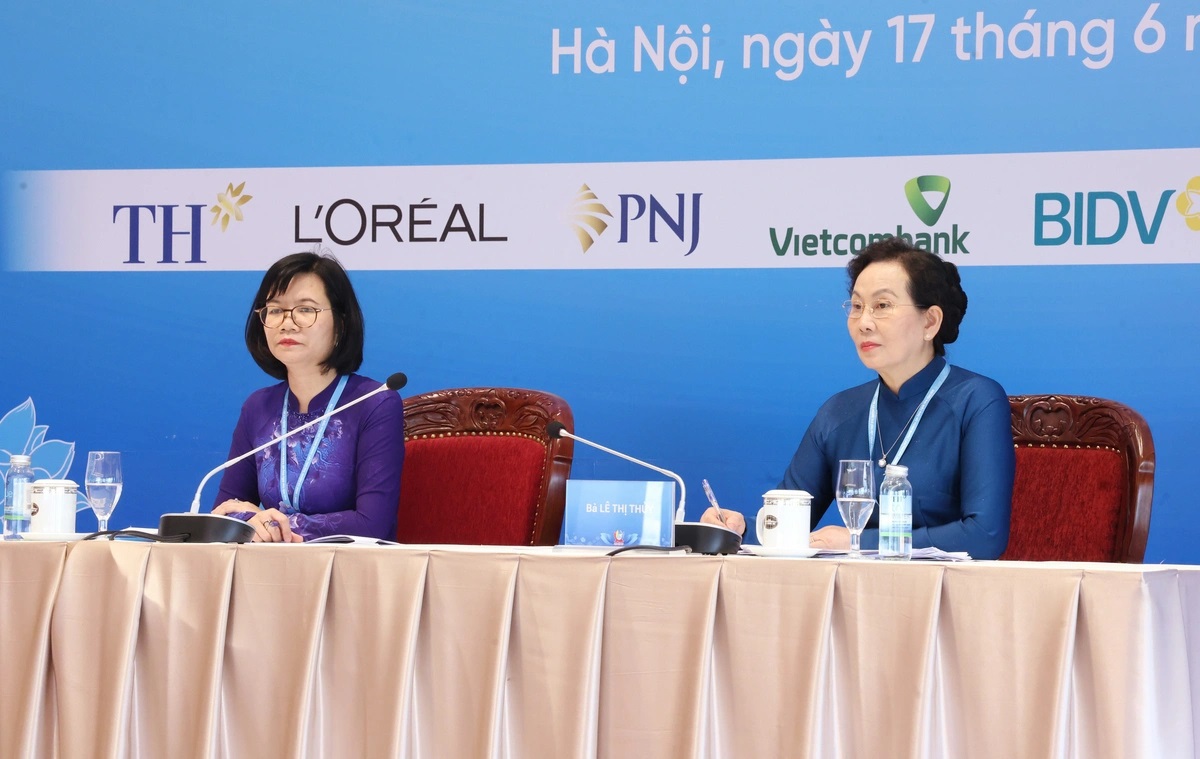
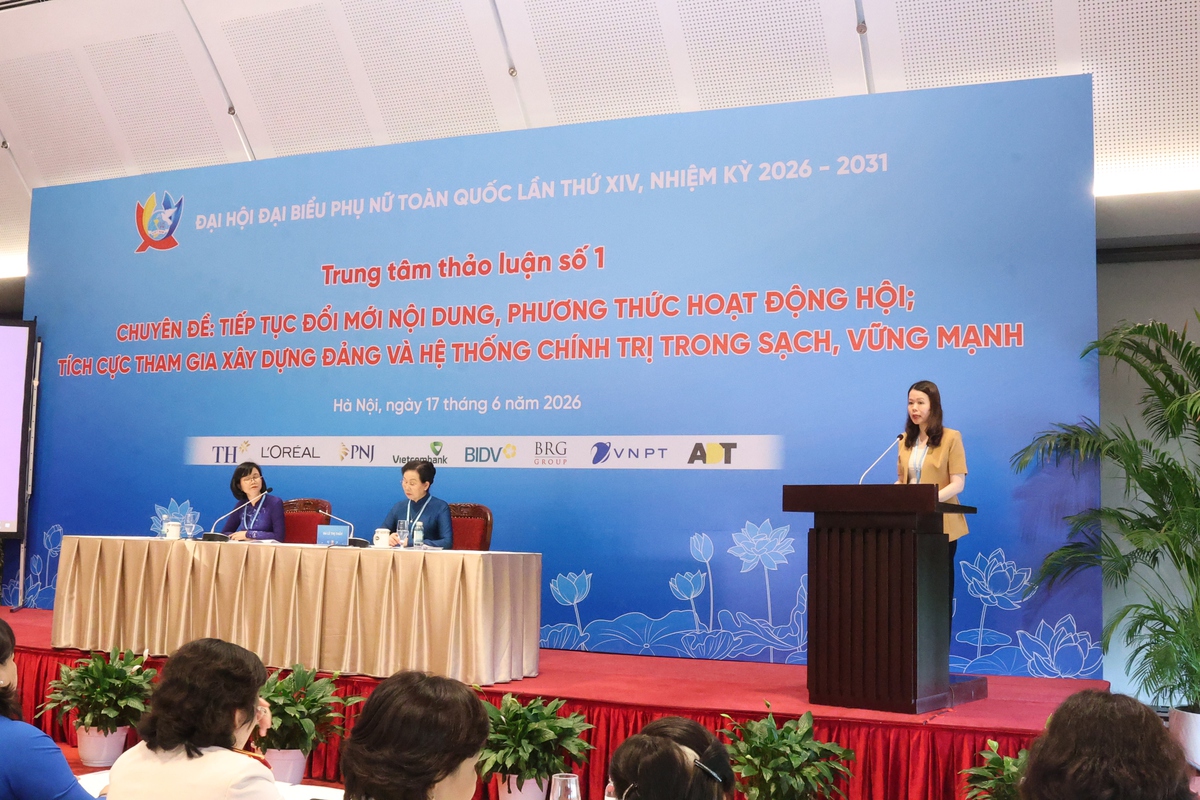
Ms. Le Thi Thuy (right), President of the VWU and Ms. Pham Thi Huong Giang, Member of the Presidium and Head of the Women's Affairs Department of the VWU, co-chair Discussion Center No. 1 under the theme "Continuing to innovate contents and operation methods; actively participating in building a clean and strong Party and political system"
Delving into each content area, the VWU President pointed out that the draft Political Report had been thoroughly researched and updated to closely follow the guidelines and policies of the Party, as well as the resolutions and directives of the Politburo and the Secretariat. Notably, the document conscientiously integrated the guiding speech delivered by General Secretary and President To Lam at the 95th anniversary of the establishment of the VWU, along with the resolutions of the 11th Congress of the Vietnam Fatherland Front and guidelines related to gender equality, the women's movement, and Association activities.
Regarding the draft Congress Resolution, the text closely reflected the practical situation and core contents of the political report. Remarkably, the draft Action Program to implement the Resolution is an entirely new feature compared to previous congresses. Instead of formulating an action program only after the conclusion of the congress as done previously, the 14th Congress directly discusses and provides feedback on the spot so that it can be deployed immediately after the event. The Action Program aligns closely with the directions, goals and tasks of the new 2026–2031 tenure, detailing highly feasible, specific activities with clear task assignments for each level from central to local authorities, while also projecting the required implementation budget.
Another novelty following this Congress is that the VWU Central Committee will not organize conventional resolution dissemination sessions sequentially from the central down to local levels. Instead, it will host training workshops coupled with rapid briefings on the Congress outcomes across both northern and southern regions, enabling all VWU levels to grasp and execute tasks as swiftly as possible. Regarding the review report, the draft focused on evaluating the performance of tasks and the working regulations of the Executive Committee, alongside the cultivation of moral qualities and lifestyles of its members, while frankly pointing out strengths, weaknesses, causes, and drawing lessons from experience.
Robust digital transformation and breakthrough models of grassroots
During the discussion session, delegates from various provinces, cities, ministries, and sectors actively contributed opinions, bringing diverse practical perspectives from their respective localities and units. Ms. Hoang Thi Thuong, Standing Vice President of the Cao Bang Provincial Women's Union, shared that with a local demographic of over 91.5 thousand members operating across nearly 1,500 grassroots branches, her provincial union had continuously innovated its operational contents and methods during the past tenure, effectively serving as a bridge between Party committees, local authorities, and the people. The provincial union focused on propagating and mobilizing members to strictly implement Party guidelines and state laws. It proactively innovated communication methods toward flexibility, strongly applying information technology and effectively utilizing social media platforms like Facebook and Zalo, as well as the Union's portal, to reach specialized target groups such as women in remote and isolated areas, ethnic minority women, and women working far from home.
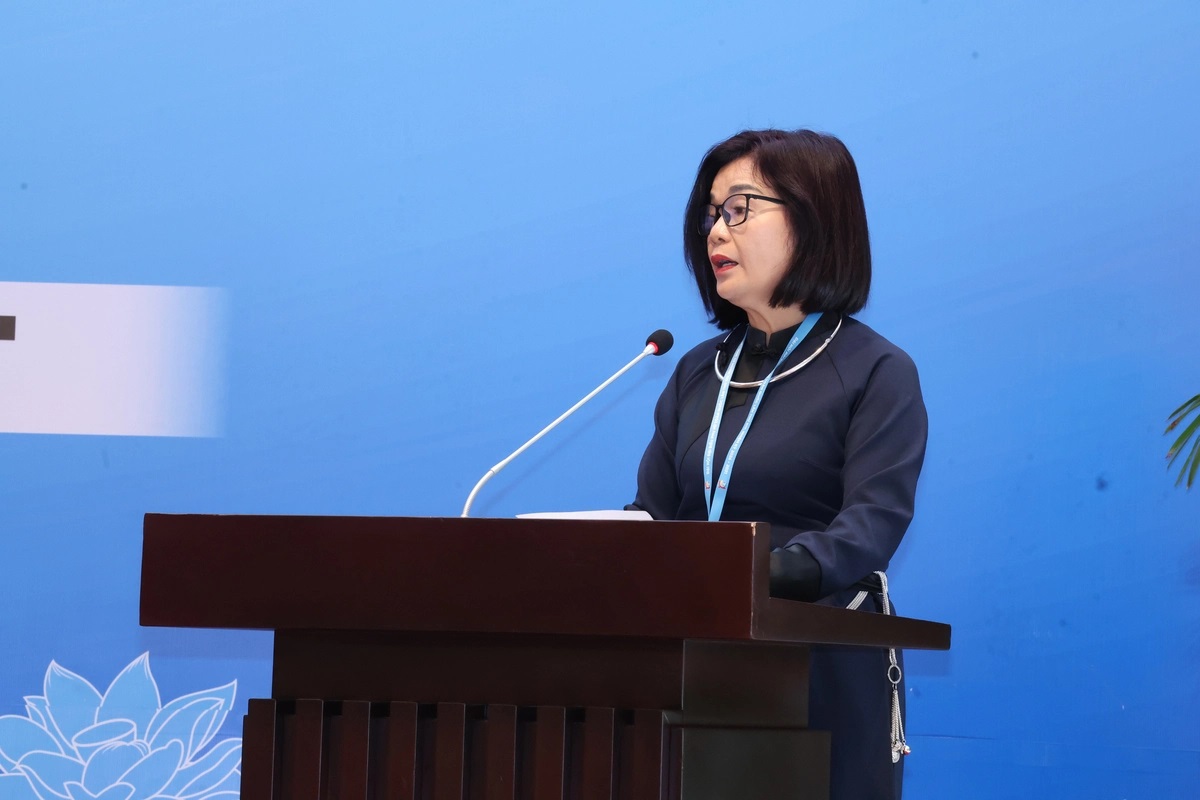
Standing Vice President of the Cao Bang Provincial Women's Union Hoang Thị Thuong speaks
Particularly in building the Party and local administration, the Cao Bang Provincial Women's Union presided over the monitoring of 3 policies and joined forces with the People's Councils and Fatherland Fronts at all levels to conduct 433 monitoring sessions regarding 12 policies related to women, children, and gender equality. Association levels also organized 577 conferences to gather women's feedback and coordinated the resolution of 113 complaints concerning women's rights and interests. A highlight in Cao Bang was the co-organization of nearly 170 policy dialogues between heads of Party committees and local administrations and women members, creating open and democratic forums that helped address the thoughts and aspirations of women in a timely manner while strengthening social consensus.
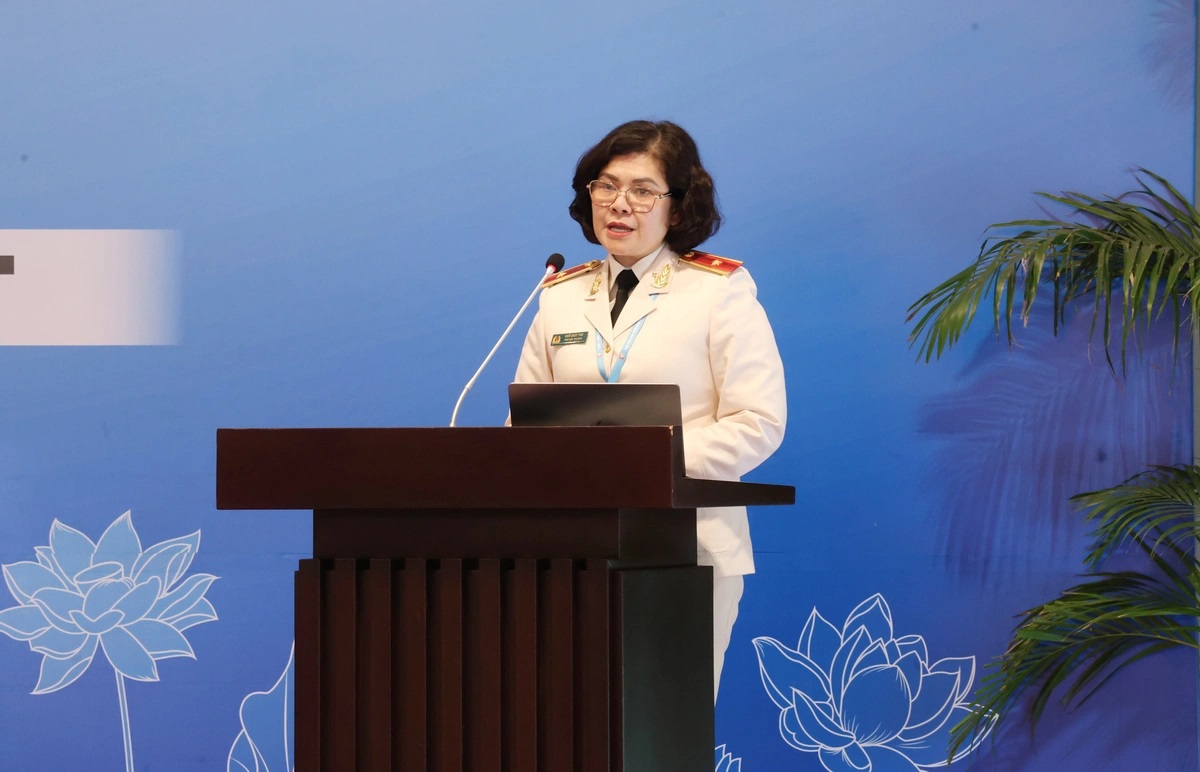
Major General Ngo Hoai Thu, Deputy Director of the Department of Political Work and Vice Chairwoman of the Committee for the Advancement of Women, Family and Children Affairs of the People's Public Security
Major General Ngo Hoai Thu, Deputy Director of the Department of Political Work and Vice Chairwoman of the Committee for the Advancement of Women, Family and Children Affairs of the People's Public Security, brought innovative models to the Congress, affirming the core role of women in the armed forces in building the Party and the political system. Major General Ngo Hoai Thu stated that the women's force of the People's Public Security has deployed many practical models highly appreciated by the Central Public Security Party Committee and leaders of the Ministry of Public Security. Prominent among these are the "English Club" and the "Online Foreign Language Club," which are maintained regularly. These initiatives have not only spread among cadres and members but have also expanded to public security officers' families, creating a habit of learning and communicating in foreign languages between parents and children, thereby building a learning society from the grassroots level.
Recently, the VWU established an online English club dedicated to fostered children, children of wounded soldiers and martyrs, and children in difficult circumstances, under the motto "learn a little every day, speak three English sentences every day". Alongside this, the "Digital Cadre, Digital Member" model has been vigorously promoted, encouraging the application of digital technology and artificial intelligence (AI) in communication and member management, which significantly enhances the efficiency of association activities. Notably, implementing the directive of General Secretary and President To Lam on the "3 Best" emulation movement, the Women's Association of the Public Security forces launched the "Writing the 3 Best Diary" movement (most disciplined, most loyal, closest to the people).
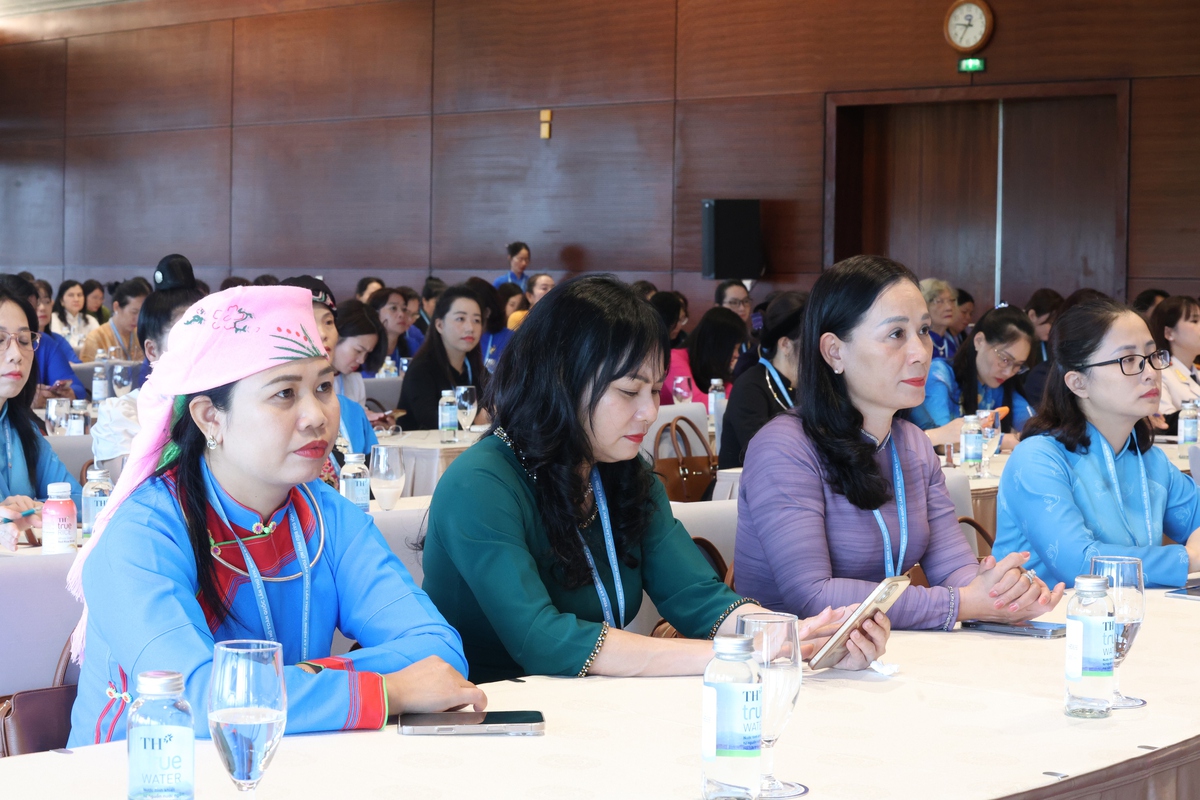
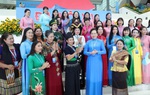
Delegates attending at Discussion Center No. 1
This movement is manifested not only through traditional written pages but has also been vividly digitized into electronic diaries using AI to record good deeds and bright initiatives in combat duties and building happy families. Articles, photos, and videos from the diaries are widely shared on the Association's fan pages, attracting great interest and interaction from officers, soldiers, and the public. This helps association cadres engage in self-reflection and self-correction to improve themselves while projecting a beautiful image of public security officers serving the people.
In addition, cadres of the People's Public Security Women's Association manually compiled an "English Vocabulary Handbook" in the form of an electronic flipbook integrated with audio and video to help members self-study anytime, anywhere via smartphones. This handbook was respectfully presented as a gift to the Congress to support the enhancement of international integration capacity for women nationwide.
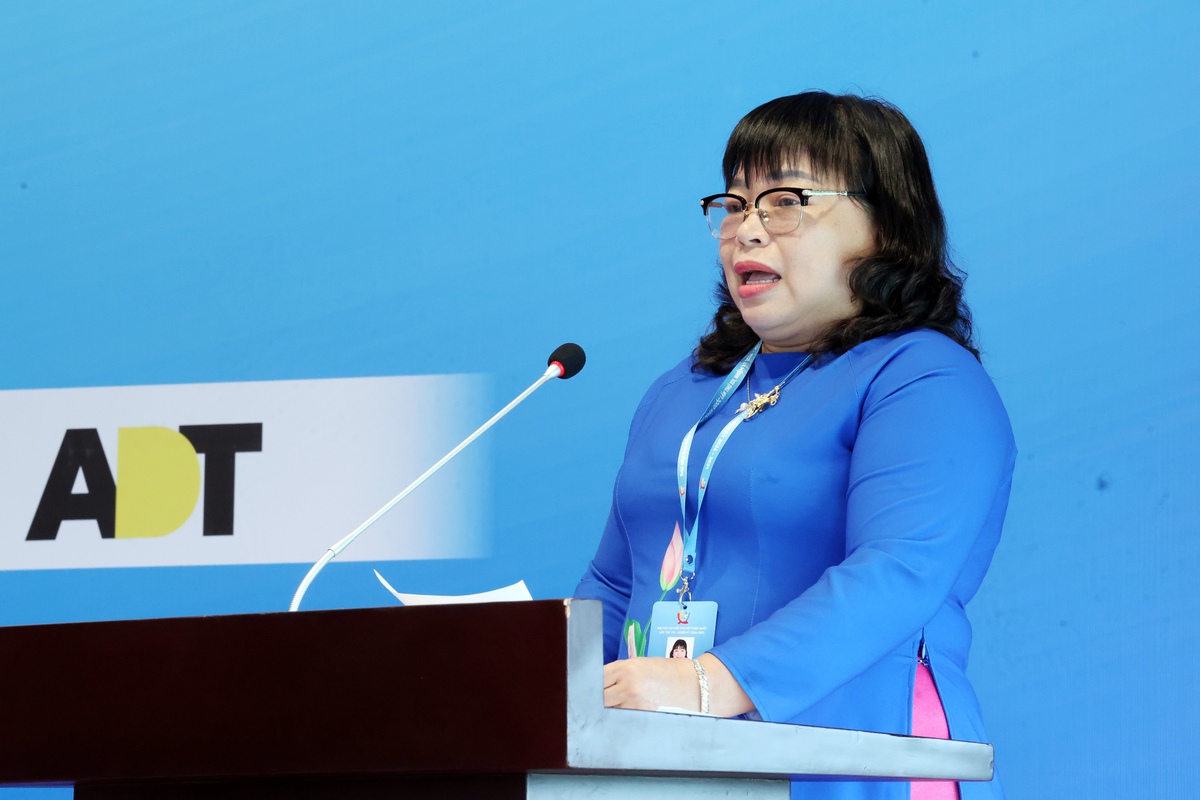
Delegate Thai Ngoc Bao Cham, President of the Dong Thap Provincial Women's Union
Contributing to the digital transformation theme, delegate Thai Ngoc Bao Cham, President of the Dong Thap Provincial Women's Union, frankly pointed out lessons learned and breakthrough solutions drawn from local reality. The Dong Thap delegate affirmed that for digital transformation to succeed within the Association, cadres must first be pioneers in learning, adapting to, and mastering technology, so that they can guide and support members effectively.
Secondly, all digital transformation activities of the association must be women-centered, originating from the practical needs of women, ensuring criteria of easy access, user-friendliness, and suitability for different target groups and proficiency levels. Thirdly, the digital transformation process is truly effective only when there is synchronous and close coordination between the VWU, sectors, businesses, technology units, and proactive creativity from the grassroots level itself. Fourthly, the VWU must pay special attention to narrowing the digital divide, supporting rural women, elderly women, and vulnerable women, determined to leave no one behind in the national digital transformation process.
Entering the new 2026–2031 tenure, the Dong Thap Provincial Women's Union commits to continuing to innovate operational contents and methods toward modernization and professionalism, enhancing digital capacity for cadres and members; building the VWU's digital ecosystem; stepping up the "Digital Literacy" movement; and multiplying models that support women in entrepreneurship, economic development, and participation in social governance on digital platforms, striving for each Association cadre to be a nucleus of innovation and each member's family to be a digital and lifelong learning family.
Elevating people-to-people diplomacy and ensuring gender mainstreaming in institutional building
Alongside VWU's activities and the women's movement, speaking from a diplomatic perspective, Ms. Nguyen Minh Hằng, Deputy Minister of Foreign Affairs, shared profound insights on elevating the Association's people-to-people diplomacy in the new situation. The Deputy Minister of Foreign Affairs proposed that the VWU's diplomatic work in the coming time needs to be further elevated, promoting good friendly relations with other countries, and converting diplomatic relations into substantive and effective cooperation projects and programs, directly contributing to the country's development goals.
Ms. Nguyen Minh Hang, Deputy Minister of Foreign Affairs
In that process, women are not just beneficiaries of development and integration achievements, but must be an important, active force directly executing diplomatic work, serving as a bridge of friendship between the Vietnamese people and international friends, helping to spread Vietnamese identity and cultural values to the world. To achieve this, Deputy Minister Nguyen Minh Hang proposed that the Association needs to continue raising the awareness of cadres and members regarding the roles, tasks, and new requirements of diplomatic work in the new era, deeply grasping the comprehensive and modern foreign policy of the Party, and linking diplomacy with economic development tasks and enhancing the country's position.
The VWU needs to innovate its thinking and approach methods, diversify contents, and apply digital technology to promote the image of the country, its people, and the contributions of Vietnamese women; and proactively participate more deeply and broadly in international cooperation mechanisms, forums, and networks on women, gender equality, and sustainable development.
At the same time, Deputy Minister Nguyen Minh Hang also emphasized the need to pay special attention to training and fostering a team of cadres handling the VWU 's foreign affairs who possess firm political mettle, integration thinking, professional proficiency, and excellent foreign language skills to meet the increasingly high demands of diplomatic work; and to strengthen close coordination between the Ministry of Foreign Affairs, ministries, sectors, localities, and Vietnamese representative missions abroad with the VWU in deploying people-to-people diplomacy activities.
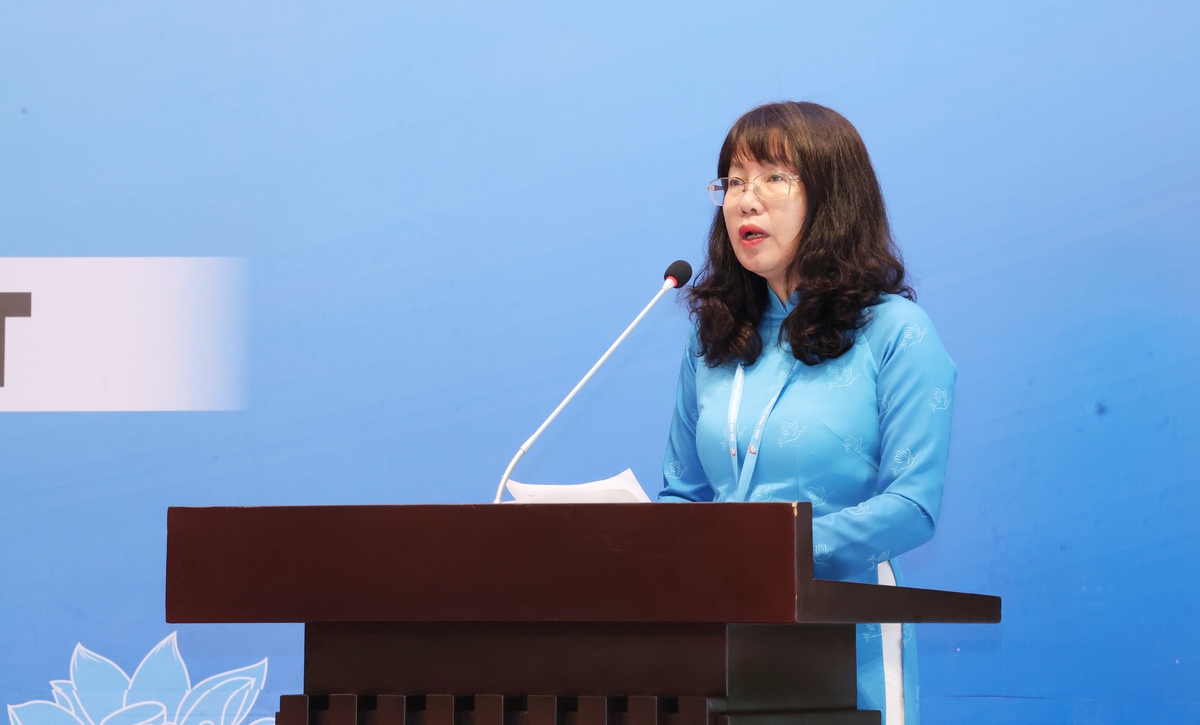
Ms. Phan Thi Hong Ha, Director General of the Department of Organization and Personnel under the Ministry of Justice
Complementing institutional building solutions, Ms. Phan Thi Hong Ha, Director General of the Department of Organization and Personnel under the Ministry of Justice, representing the Committee for the Advancement of Women in the Justice Sector, delivered an important presentation on ensuring gender mainstreaming in law-making and the role of the VWU. Ms. Phan Thi Hong Ha affirmed that in the process of building and perfecting the socialist rule-of-law state of Vietnam, ensuring gender equality and gender mainstreaming in law-making is receiving increasing attention from the Party and the State, viewed as a consistent requirement to ensure human rights, citizens' rights, and sustainable development.
Acting as an advisory body to the Government, the Ministry of Justice always focuses on implementing gender mainstreaming during the drafting of legal normative documents; while coordinating closely with the Vietnam Women's Union to promote the role of the Union as an organization representing the legitimate rights and interests of women, actively participating in formulation, social criticism, and monitoring of policy implementation. The 2006 Law on Gender Equality and the 2015 Law on Promulgation of Legal Normative Documents (amended in 2020) created a solid legal foundation for gender mainstreaming, in which a notable new point is focusing on gender impact assessment right from the policy formulation stage for draft laws and ordinances with major social impacts.
The Ministry of Justice also issued a Circular providing specific guidance on gender impact assessment in fields such as labor, education, healthcare, science and technology, culture, and family, helping to identify risks of inequality early for timely adjustments, especially for vulnerable women, women in remote and isolated areas, and ethnic minority regions. Over the past time, the Vietnam Women's Union has very well promoted its role as a bridge, promptly reflecting the breath of life, thoughts, and aspirations of women strata into the legislative process, participating in drafting committees of many important laws such as the Civil Code, Law on Marriage and Family, Law on Legal Aid, Law on Grassroots Mediation, and Law on Adoption.
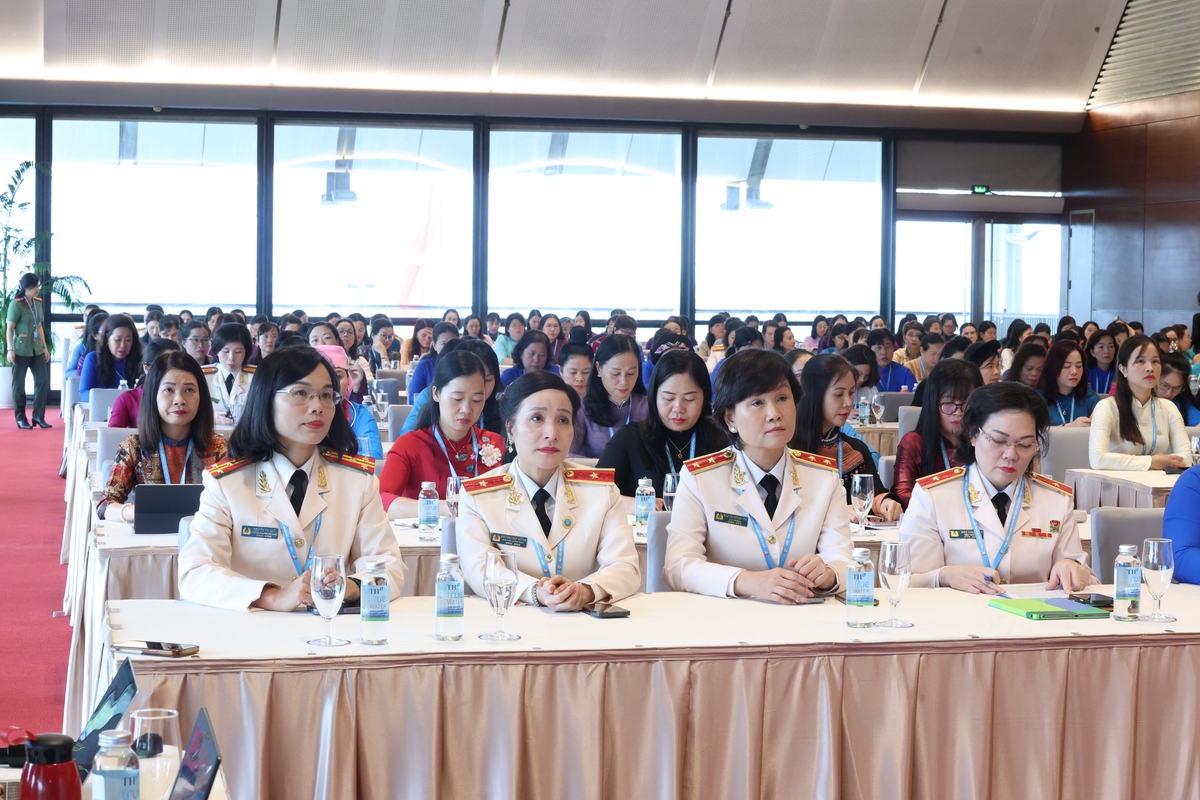
Delegates attending at Discussion Center No. 1.
To continue improving the efficiency of this work in the coming period, the representative of the Ministry of Justice recommended continuing to synchronously perfect the institutional system on gender equality, improve the quality of gender impact assessments, increase the use of sex-disaggregated digital data, and focus on training knowledge and skills of gender mainstreaming for the team of cadres engaged in law-making and women's union cadres at all levels; while continuing to consolidate and improve the efficiency of the coordination mechanism between the Ministry of Justice and the VWU.
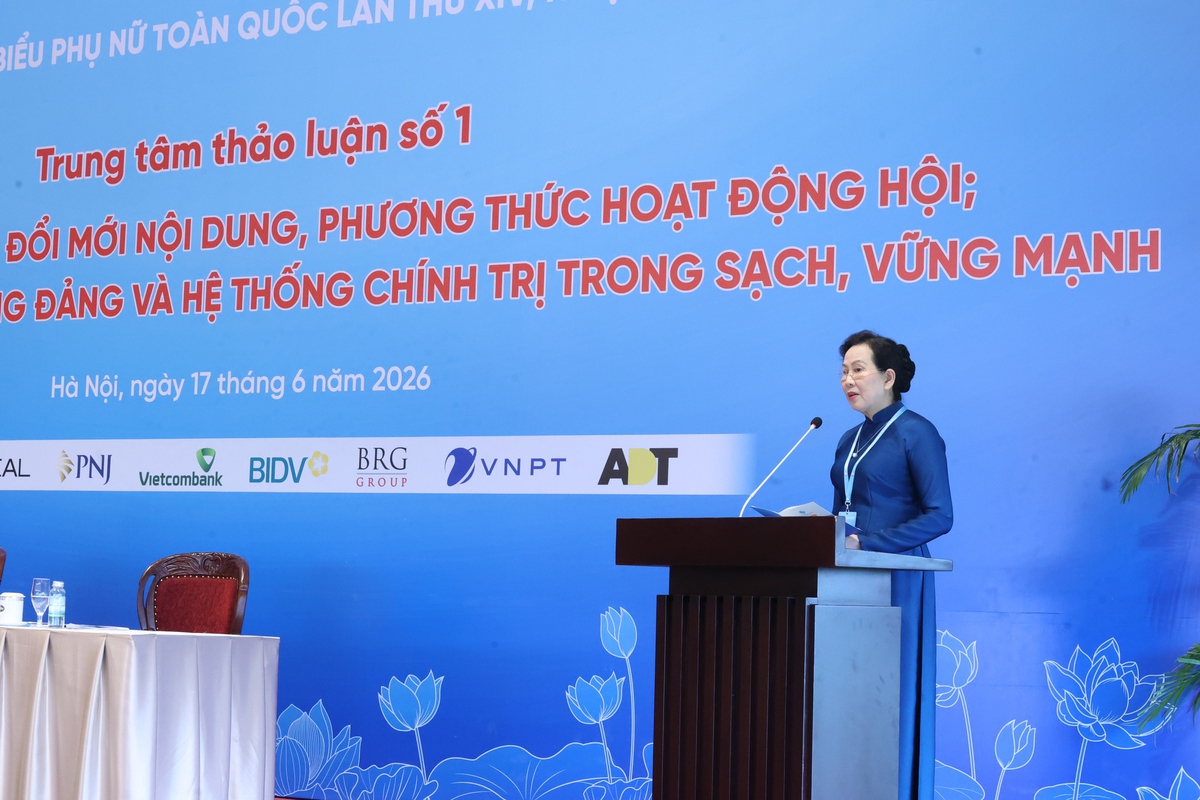
Ms. Le Thi Thuy, President of the Vietnam Women's Union, delivers the concluding speech for the working session of Discussion Center No. 1
After listening to all the lively, frank, and intellectually rich discussion remarks by the delegates, Member of the Party Central Committee, Vice Chairwoman of the Central Committee of the Vietnam Fatherland Front, and VWU President Le Thi Thuy delivered a concluding speech for the working session of Discussion Center No. 1. Ms Le Thi Thuy affirmed that the speeches delivered directly in the hall as well as the written opinions of the delegates all expressed high consensus with the draft documents submitted to the Congress, while adding and vividly illustrating them with achieved results, good models, and creative ways of doing things from the practical realities of localities and units during the past tenure, despite the difficulties and challenges of the new situation.
The delegates, with great enthusiasm and responsibility, proposed many practical solutions to continue innovating the contents and operation methods of the Association toward modernization, professionalism, robust application of technology, and digital transformation; while improving the quality of participation in building the Party and administration, effectively performing the functions of social monitoring and criticism, and protecting the legitimate rights and interests of women and children. The Congress will fully and seriously acknowledge and absorb all these valuable contributions; assigning the Secretariat to compile detailed and accurate summaries to report to the Congress Presidium for consideration, absorption, and perfection of the official documents to be submitted to the 14th National Women's Congress.