Fatherland Front expands space for connecting overseas Vietnamese through digital platforms


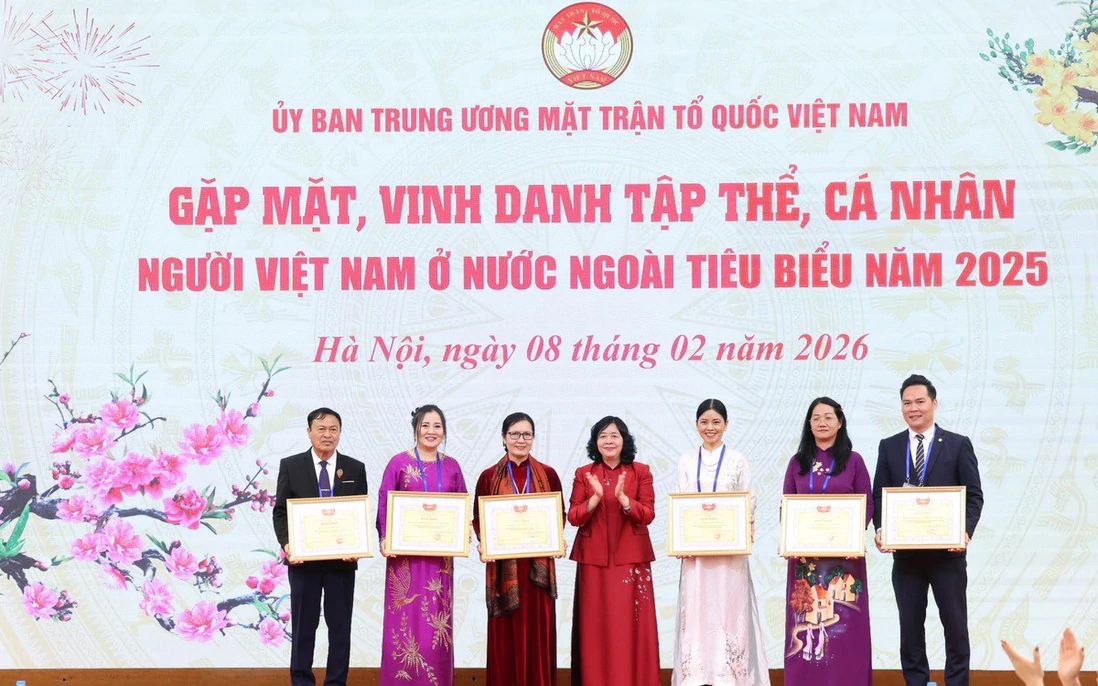
Politburo member, Party Central Committee Secretary and President of the Central Committee of the Vietnam Fatherland Front Bui Thi Minh Hoai (centre) presents certificates of merit honouring outstanding overseas Vietnamese individuals and organisations in 2025.
Politburo Resolution No. 23-NQ/TW dated 2 August 2026 on overseas Vietnamese affairs calls for a major renewal of approaches to mobilising, uniting and harnessing the resources of overseas Vietnamese. For the Vietnam Fatherland Front, digital transformation will help create a new way to broaden the space for connecting with, listening to and bringing together Vietnamese communities abroad.
Expanding the space of national unity
After more than 20 years of implementing Politburo Resolution No. 36-NQ/TW, overseas Vietnamese affairs have undergone fundamental and comprehensive changes. More than 6.5 million Vietnamese now live in over 130 countries and territories. The community continues to grow, with increasingly diverse profiles and a rising proportion of experts, intellectuals, scientists, entrepreneurs and highly skilled workers.
Overseas Vietnamese are not only an inseparable part of the Vietnamese nation but also an important strategic resource, contributing to the country's overall strength, connecting Viet Nam with the world and participating in national construction, development and defence.
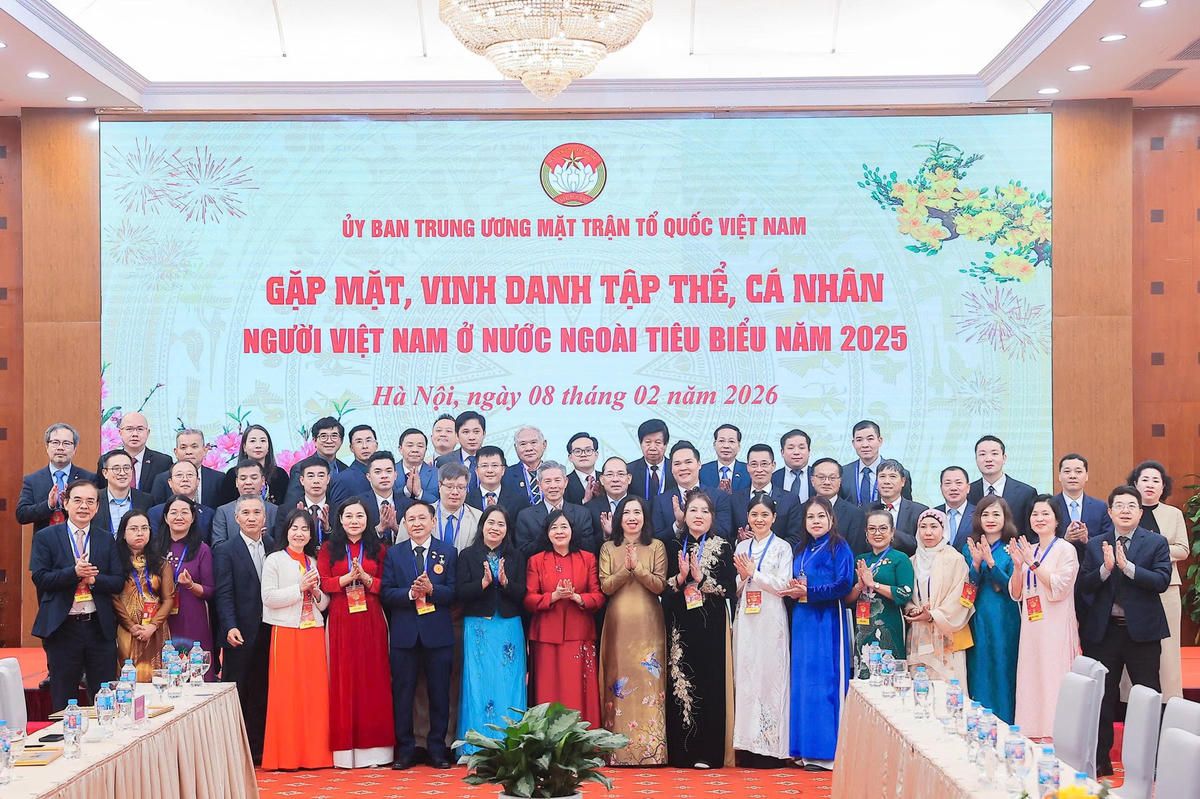
Politburo member, Party Central Committee Secretary and President of the Central Committee of the Vietnam Fatherland Front Bui Thi Minh Hoai poses for a commemorative photo with delegates attending a meeting honouring outstanding overseas Vietnamese individuals and organisations in 2025. Photo: Hoai Nam.
The community includes long-settled generations, intellectuals, experts, entrepreneurs, workers, international students and younger generations born abroad. Each group has different needs, forms of attachment to the homeland and capacities to contribute. A single approach to mobilisation therefore cannot fully meet these emerging requirements.
Face-to-face meetings, return-to-roots programmes and support for community associations remain irreplaceable. However, geographical distance, time differences and the dispersed nature of overseas Vietnamese communities make it necessary to extend the space of national unity into the digital environment.
Plan No. 12/KH-MTTW-UB on implementing the Vietnam Fatherland Front's action programme for the 2026-2031 term clearly sets out the task of "renewing approaches to mobilising and connecting overseas Vietnamese communities through digital platforms; and supporting the organisation of National Unity Festivals among overseas Vietnamese communities".
This is not simply about creating another information page or holding more online meetings. The key is to build a common space where overseas Vietnamese can access information, connect with the Vietnam Fatherland Front, share their concerns, propose initiatives and participate more conveniently in community activities.
From information links to partnership and co-creation
The key shift is from event-based mobilisation to regular engagement. Digital platforms will only have real value when overseas Vietnamese can submit recommendations and track responses; experts can contribute to policymaking remotely; entrepreneurs can seek cooperation opportunities; and young overseas Vietnamese can participate in cultural, volunteer and start-up programmes without being limited by geography.
At the 11th National Congress of the Vietnam Fatherland Front, Party General Secretary and President To Lam stressed: "Digital transformation must create new ways for the Front to be closer to the people, listen to more people, respond to people more quickly and make the handling of people's petitions more transparent. Digital platforms must operate effectively so that people can submit their reflections, petitions and opinions anytime and anywhere; the 24/7 Digital Fatherland Front Portal should be developed, a 'Month of Listening to the People' organised, and a provincial social trust index introduced."
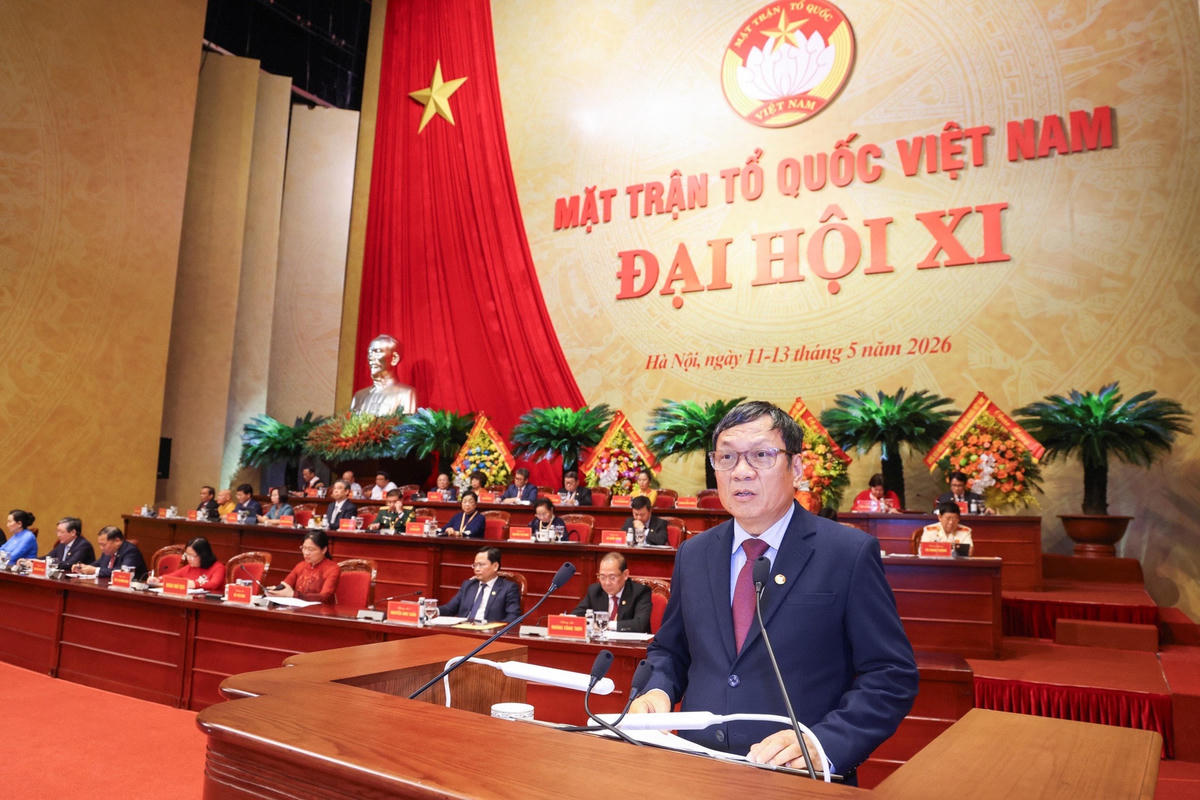
Hoang Dinh Thang, member of the Central Committee of the Vietnam Fatherland Front and President of the Union of Vietnamese Associations in Europe, delivers a presentation at the 11th National Congress of the Vietnam Fatherland Front, proposing solutions to renew overseas Vietnamese affairs amid digital transformation and deeper international integration. Photo: Quang Vinh.
This approach should be applied directly to overseas Vietnamese affairs. Digital connectivity cannot stop at information dissemination. It must include mechanisms for receiving, classifying, processing and reporting back on the outcomes of recommendations.
As the 24/7 Digital Fatherland Front Portal is developed and operated, a dedicated component for overseas Vietnamese could be established, ensuring interoperability without overlapping with agencies responsible for overseas Vietnamese affairs. This component could incorporate an association map, an expert database, consultation forums, a Vietnamese-language learning resource centre and a space for connecting projects.
A breakthrough in mobilisation mechanisms
Resolution No. 23-NQ/TW calls for "completing mechanisms and creating favourable conditions for overseas Vietnamese to participate actively and responsibly in the country's political, economic and social life; become members of some domestic socio-political organisations; contribute opinions to the formulation of policies and guidelines; and participate in programmes and projects on socio-economic development, science, technology, innovation and digital transformation".
The resolution also assigns the Party Committee of the Vietnam Fatherland Front and central mass organisations the task of leading and directing research and the development of implementation guidelines. This represents a breakthrough that can help make ties between domestic organisations and overseas Vietnamese more stable and long-term, linked to both the right to participate and the responsibility to contribute.
For the new provisions to become reality, it is essential to renew the ways in which overseas Vietnamese are organised, connected and engaged. Digital transformation should therefore be viewed as a means of expanding the space for mobilisation, shortening geographical distances, strengthening interaction and, more importantly, turning the concerns, aspirations and initiatives of overseas Vietnamese into concrete contributions to the country.
In response to these requirements, efforts can focus on several groups of solutions aimed at establishing a substantive, regular and sustainable approach to engagement.
First is the development of a shared, interoperable digital ecosystem connecting the 24/7 Digital Fatherland Front Portal with member organisations, Vietnamese representative missions abroad and relevant State agencies. At the same time, a people-centred digital network should be established. The Front should mobilise overseas Vietnamese serving as members of the Central Committee of the Vietnam Fatherland Front, together with intellectuals, entrepreneurs, religious and community leaders, respected individuals, association leaders and younger generations as key connectors.
A network of digital community correspondents could also be established by location and sector to identify needs and detect initiatives. In practice, overseas Vietnamese members of the Front have already played an important role in connecting communities and supporting the standing of overseas Vietnamese in their host countries.
Next, online dialogue, consultation and feedback mechanisms should be institutionalised. The Front could regularly organise thematic forums for overseas Vietnamese, seek their input on draft policies, open consultation sessions for experts and establish mechanisms for responding to petitions within specified timeframes. When overseas Vietnamese see that their views are heard, receive responses and have the potential to bring about change, digital connectivity can become a source of social trust.
Finally, connectivity should be transformed into concrete programmes of action: experts linked to scientific tasks; entrepreneurs linked to investment projects; young people linked to start-ups and cultural experiences; teachers linked to Vietnamese language learners; and charitable resources linked to specific people and communities in need. Mobilisation campaigns should provide remote participation mechanisms, publicly report results, recognise contributions and strengthen the ability to identify and respond to misinformation.
Connecting overseas Vietnamese through digital platforms is not only a technological task. It is a process of renewing the approach to national unity under new conditions. Digital connectivity must go hand in hand with organisational and human connections and with the cultivation of trust. When every Vietnamese living abroad, wherever they may be, can remain connected to the homeland, contribute their knowledge and participate in common affairs, the strength of the great national unity bloc will continue to grow in the digital era.
Plan No. 12/KH-MTTW-UB on implementing the Vietnam Fatherland Front's action programme for the 2026-2031 term sets out the task of "renewing approaches to mobilising and connecting overseas Vietnamese communities through digital platforms; and supporting the organisation of National Unity Festivals among overseas Vietnamese communities".
Source: Daidoanket.vn